2026 Maryland LGBTQIA+ Community Needs Assessment Preliminary Findings Report
Key Findings
-
Only 20% of respondents feel extremely connected to an LGBTQIA+ community in Maryland.
Over 37% report that LGBTQIA+ resources are only slightly available or not available to them.
Respondents living in rural areas and those with multiple marginalized identities report significantly lower access.
-
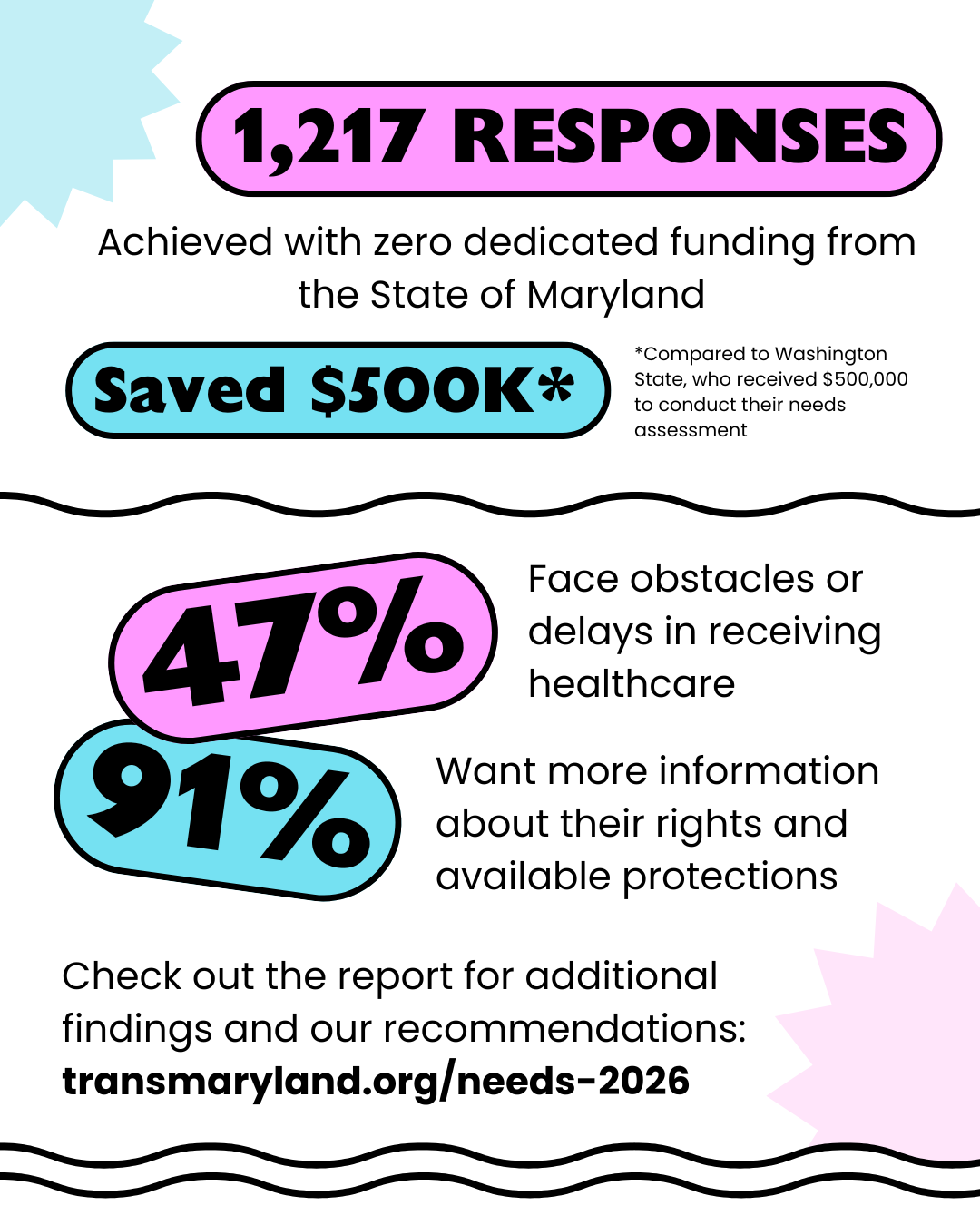
Over 47% of respondents experienced obstacles or delays in receiving health care in Maryland.
36% sometimes avoid medical care due to anticipated discrimination; 13% always avoid care for this reason.
Barriers are most pronounced in mental health care, gender-affirming care, and specialty care.
Respondents report discrimination most frequently based on gender identity, sexual orientation, body size, disability, and mental health condition.
-
Nearly 27% of respondents experienced a hate crime while living in Maryland.
Verbal assault was the most common incident, followed by vandalism and sexual assault.
These experiences far exceed the number of incidents captured in the Maryland State Police Hate Bias Incident Report, indicating substantial underreporting and pointing to gaps in trust, access, and survivor support systems.
-
Past research has consistently found that violence and discrimination are consistently associated with negative mental health outcomes. When we examined these outcomes in this needs assessment, over 22% of respondents reported seriously considering suicide in the past 12 months.
Over 61% reported lifetime suicidal ideation.
Despite these figures, many respondents rated their mental health as “good” or “fair,” suggesting unmet needs masked by resilience.
Mental Health and Crisis Support Resources:
Veterans Crisis Line (988 + Press 1 or text 838255)
The Trevor Project (866-488-7386 | text 678678)
Trans Lifeline (877-565-8860)
SAGE Lifeline (877-360-5428)
GLBT National Hotline (888-843-4564)
-
Nearly one-quarter of respondents changed their legal name while living in Maryland; many reported the process as difficult.
Transgender and nonbinary respondents face disproportionate barriers navigating identity documents, affecting access to employment, housing, health care, and safety.
-
Fewer than 17% of respondents reported being very familiar with LGBTQIA+ state policies and legal protections.
Over 91% want more information about their rights and available protections.
Preliminary Recommendations
-
The breadth and consistency of the findings underscore the need for a dedicated Office of LGBTQIA+ Affairs within State government to operationalize policy, coordinate implementation, and ensure accountability across agencies. While the Commission is mandated to assess challenges and make recommendations, these findings demonstrate that Maryland lacks sufficient executive infrastructure to translate recommendations into sustained action.
A dedicated office would support:
Cross-agency coordination and implementation of LGBTQIA+-inclusive policies
Ongoing data collection, evaluation, and reporting
Centralized education and navigation of LGBTQIA+ rights and services
Strategic partnership with local governments and community-based organizations
-
Findings related to health care access, discrimination, and mental health outcomes point to urgent gaps in affirming care, particularly for transgender and nonbinary Marylanders and those living in rural areas.
The State should:
Invest in expanding access to affirming primary, mental health, and gender-affirming care
Address insurance and coverage barriers for gender-affirming treatment
Support workforce development and provider training to reduce discrimination and care avoidance
-
The uneven availability of LGBTQIA+ resources across Maryland highlights the critical role of grassroots and community-based organizations in providing culturally competent services, crisis support, and community connection.
The State should:
Provide sustained funding to LGBTQIA+-serving nonprofits, with particular attention to rural and underserved regions
Recognize community-based organizations as essential service partners in health, safety, and outreach efforts
Reduce administrative burdens that limit small organizations’ ability to access State funding
-
The strong demand for information about state policies and legal protections demonstrates that existing rights are not sufficiently accessible or understandable to those they are intended to protect.
The State should:
Develop centralized, accessible tools to help LGBTQIA+ Marylanders navigate rights, services, and state systems
Ensure materials are inclusive, plain-language, and responsive to diverse identities and needs
Coordinate education efforts across agencies to avoid fragmentation and duplication
-
Barriers to identity document changes create cascading impacts on employment, housing, health care access, and safety.
The State should:
Simplify and standardize processes for name and gender marker changes
Reduce or eliminate fees and unnecessary documentation requirements
Ensure consistent implementation across agencies and jurisdictions
-
The prevalence of hate violence and underreporting identified in this assessment points to the need for stronger, more accessible systems of prevention and support.
The State should:
Improve access to reporting mechanisms and survivor services
Strengthen coordination between law enforcement, victim services, and community organizations
Invest in prevention, education, and community-based safety initiatives
-
Across all findings, the absence of dedicated resources emerged as a recurring barrier to progress. Addressing the needs identified in this assessment will require intentional and visible investment.
The State should:
Incorporate LGBTQIA+ needs into the State budget in a sustained and transparent manner
Align funding with the Commission’s findings and recommendations
Support the long-term capacity of agencies and community partners to deliver results